

Bentley Continental GT Supersports (2nd Gen)
£95,000
usedIndicative market price, updated periodically.
700bhp
Power
3.5s
0-100 km/h
336km/h
Top Speed
£95,000
Price Used
How hard it pulls.
Peak g-force the instant you bury the throttle, estimated from the car's 0–100 time and drivetrain.
Bentley Continental GT Supersports (2nd Gen)Estimated peak launch g from the 0–100 time and drivetrain: an honest approximation, not a measured figure.
The Bentley Continental GT Supersports (2nd Gen) is a 2-door coupe by Bentley, with 700 bhp, 1017 Nm of torque, a 0-100 km/h time of 3.5 seconds and a top speed of 336 km/h. Indicative used value: approximately £95,000. Actual values vary with specification, condition and history.
Dream Car Garage Editorial · Last updated 29 October 2026
Overview
We have not driven this car. This review is based on published specifications and the sources listed below.
The third Supersports
The Supersports name has appeared three times in Bentley's history: on the stripped speed machines of the 1920s, on the 2009 Continental Supersports that shocked the GT establishment, and on this car, the 2017 second-generation version that closed the W12 Continental era at its most extreme. The formula was torque first: the 5,998 cc W12 pushed to 700 bhp and 1017 Nm through higher-capacity turbochargers, revised intercooling and strengthened crankshaft and rod bearings, an increase of 67 bhp and 130 lb ft over the previous fastest Continental. The catalogue records a run to 100 km/h in 3.5 seconds and a 336 km/h maximum. Only an eight-speed automatic was offered, and the suspension was lowered and stiffened. Autoweek's contemporary coverage quoted a coupe weight of around 5,027 pounds and 3.4 seconds to 60 mph, with the convertible slightly heavier and a tenth slower.
We have not driven this model for this article. This desk-researched ownership guide relies on Bentley's official heritage page for a 2017 Continental Supersports, Autoweek's launch-period technical coverage and the DVSA vehicle recall service. The Autoweek piece reports the car's launch specification rather than surveying long-term ownership, so its observations are inspection prompts for the individual example, not predictions that every Supersports will behave the same way.
The hardware that separates it
The Supersports carried the largest carbon-ceramic brakes Bentley had ever fitted: 16.5 inches, or 420 mm, at the front and 14 inches at the rear, which the company described as the largest of their type in the world. A titanium exhaust option saved around ten pounds. The X Specification added eight duo-tone paint schemes, carbon heel plates and carbon mirrors, and the standard wheels were 21-inch forged items. Torque vectoring by brake sharpened turn-in on a car that still weighs the better part of two and a half tonnes. Autoweek recorded the contemporary performance claims as the fastest Bentleys of their day: 209 mph for the coupe and 205 mph for the convertible. This is not a lightweight special in the track-day sense; it is the fastest, hardest expression of the luxury GT template, and it should be inspected as the grand tourer it fundamentally remains.
Ownership realities
At this altitude the ownership checklist is about condition and provenance more than wear. The quoted 5,027 pounds for the coupe and around 5,412 for the convertible define the consumables scale: tyres, brakes and suspension parts are priced for a very heavy, very fast car, and there is no economy version of any of them. Brakes are the headline: carbon-ceramic discs should be measured for thickness and checked for cracking, with the understanding that replacement is a five-figure exercise per corner from Bentley. The W12's service rhythm follows the rest of the Continental family, with synthetic oil, attentive cooling and healthy batteries as the foundations. Cars of this performance level often lead eventful lives, so paint depth readings, panel gaps and a documented accident history carry more weight than mileage alone. Storage matters: like other Continentals, the Supersports dislikes a flat battery, and a trickle charger plus regular exercise preserve both the electronics and the turbocharger's seals. Because carbon-ceramic disc replacement is a five-figure exercise per corner from Bentley, a used inspection should measure pad and disc thickness rather than eyeball them; a seller who knows those numbers is usually a seller who has maintained the car. Convertible examples carry around 385 pounds more than coupes, and the roof mechanism deserves the same inspection discipline as any folding fabric top. The torque-vectoring system is a wear-free electronic aid, but the lowered, stiffened suspension places extra load on bushings and drop links, so a knocking noise over broken roads deserves diagnosis before purchase.
The market around it
The 2017 Supersports arrived as the W12 Continental reached its development ceiling, with prices that reflected its flagship status, and the Autoweek coverage positioned it as the fastest, most powerful Bentley road car yet built. The catalogue records production across 2017 to 2019, a short window that concentrated the build run and means most examples changed hands within living memory of their first registration. Production ended as Bentley moved the Continental range to its third generation, which fixed the second-generation car's place in the lineage. The third use of the Supersports name gives it a place in the marque's history that outlasts any single model cycle. The first-generation car of 2009 established the template, and the 2017 version's position above the Speed in price and intent has remained consistent since launch, with the X Specification duo-tone cars the most visually distinctive examples of the entire production run. The honest framing for a buyer is that this car trades on being the extreme, and the market for extremes is narrower than the market for Continentals generally. Patience in finding the right car matters more than urgency, and the right car is one with complete documentation, original specification and brakes that measure well.
We have not driven this model for this article. No present valuation, investment assurance or universal failure rate is offered. The Supersports' value as an ownership proposition is that it is the definitive expression of the torque-first Continental: 700 bhp, 750 lb ft, torque vectoring and the biggest brakes of its era, wrapped in a cabin that still reads as luxury rather than compromise. Buy on brake measurement, specification originality and documented care, and the third Supersports earns its place in the lineage.
Specifications
Engine
6.0L (5998 cc) twin-turbo W12 petrol
Displacement
6.0L
Power
700 bhp
Torque
1017 Nm
0-100 km/h
3.5s
Top Speed
336 km/h
Drivetrain
AWD
Country
UK
Body Style
2-door coupe
Years
2017–2019
Price Used
£95,000
Specifications are manufacturer-published figures.
More from Bentley
 626 hp
Bentley Continental GT Mulliner (3rd Gen)
£230,000
 650 hp
Bentley Continental GTC Speed (3rd Gen)
£225,000
 650 hp
Bentley Continental GT Speed (3rd Gen)
£210,000
 626 hp
Bentley Flying Spur W12 Speed
£175,000
 626 hp
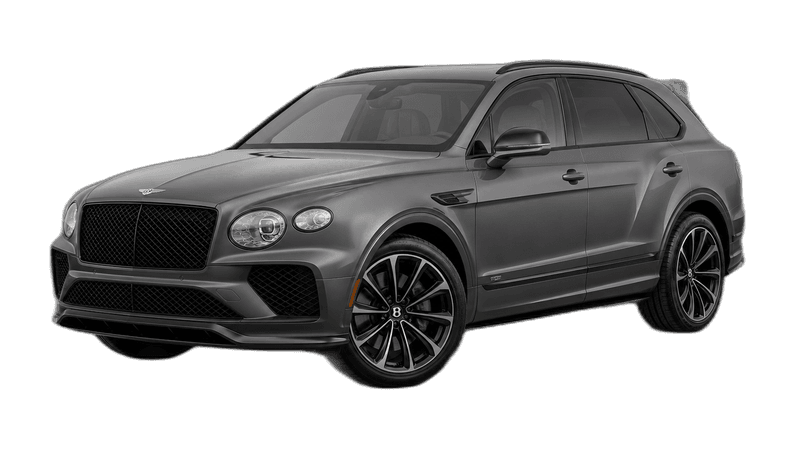
Bentley Bentayga Speed
£175,000
 542 hp
Bentley Continental GT V8 (3rd Gen)
£155,000
Frequently Asked Questions
What are the specifications of the Bentley Continental GT Supersports (2nd Gen)?
The Bentley Continental GT Supersports (2nd Gen) is a 2-door coupe by Bentley, with 700 bhp, 1017 Nm of torque, a 0-100 km/h time of 3.5 seconds and a top speed of 336 km/h. Indicative used value: approximately £95,000. Actual values vary with specification, condition and history.
How much does a Bentley Continental GT Supersports (2nd Gen) cost?
Indicative used value: approximately £95,000. Actual values vary with specification, condition and history.
What drivetrain does the Bentley Continental GT Supersports (2nd Gen) use?
The Bentley Continental GT Supersports (2nd Gen) is configured with all-wheel drive.
What type of car is the Bentley Continental GT Supersports (2nd Gen)?
The Bentley Continental GT Supersports (2nd Gen) is a hyper gts manufactured by Bentley in UK. Production ran from 2017 to 2019.