
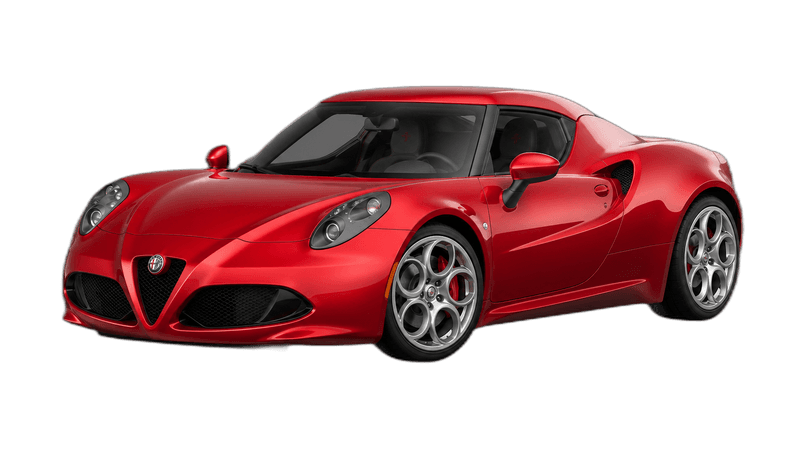
Alfa Romeo 4C
£45,000
usedIndicative market price, updated periodically.
237bhp
Power
4.5s
0-100 km/h
258km/h
Top Speed
£45,000
Price Used
How hard it pulls.
Peak g-force the instant you bury the throttle, estimated from the car's 0–100 time and drivetrain.
Alfa Romeo 4CEstimated peak launch g from the 0–100 time and drivetrain: an honest approximation, not a measured figure.
The Alfa Romeo 4C is a 2 seater fixed-head coupé by Alfa Romeo, with 237 bhp, 350 Nm of torque, a 0-100 km/h time of 4.5 seconds and a top speed of 258 km/h. Indicative used value: approximately £45,000. Actual values vary with specification, condition and history.
Dream Car Garage Editorial · Last updated 24 October 2026
Overview
We have not driven this car. This review is based on published specifications and the sources listed below.
The case for the 4C
The Alfa Romeo 4C arrived in 2013 with a specification that still looks remarkable: a carbon-fibre monocoque, a mid-mounted turbocharged engine and a dry weight under 900 kg, all for the price of a well-optioned hot hatchback. The 1.75-litre turbocharged four-cylinder produced 237 hp, which does not sound like much until you account for the mass it has to move. The result is a car that feels genuinely light on its feet in a way almost nothing this side of a Lotus does.
The 4C is not a rounded car, and it was never meant to be. There is no power steering, so low-speed manoeuvres demand real effort, and the ride is firm on broken surfaces. The cabin is cramped, the luggage space is minimal and the infotainment feels dated. But on the right road the unassisted steering, the instant throttle response and the low mass combine into something special. A Spider version joined the coupe in 2015 with a removable roof panel. The engine sits behind the driver and breathes through a prominent intake, so the 4C is a noisy, involving car even at modest speeds. It is the kind of sports car that makes an ordinary journey feel like an event, which is precisely its appeal.
What it costs to run
The 4C uses a relatively small engine and a dual-clutch gearbox, so routine servicing is less exotic than the carbon tub suggests. An annual service at an independent Alfa Romeo specialist is typically £400 to £700, with a larger service every few years. The dual-clutch transmission has a fluid and filter change on the schedule, usually around £300 to £500. Tyres are a modest cost compared to a supercar, roughly £600 to £900 for a set of the correct-specification rubber.
The engine is a development of Alfa's four-cylinder and is generally robust when maintained. Oil changes matter, and a car that has been tracked or tuned needs more frequent attention. Insurance is reasonable for the performance. Fuel economy is genuinely good for a mid-engined sports car, with 30 mpg or more achievable on a steady run.
Known weak points
The dual-clutch gearbox is the component to understand. Low-speed behaviour can be jerky, and mechatronic or actuator faults are reported. A car that hesitates, hunts or shows a transmission warning needs a specialist diagnosis before purchase. Check the service history for gearbox fluid changes.
The carbon tub is a strength, but it means any significant impact damage is a structural repair, not a panel-beating job. Ask about accident history and inspect the tub's visible areas carefully. Air conditioning faults, sticky interior plastics and minor electrical gremlins are reported. The unassisted steering is not a fault, but a buyer used to modern cars should test it at low speed before committing. Early cars had some build-quality niggles around trim fit and panel alignment.
What to check before buying
Start with the service history. A car maintained by an Alfa Romeo specialist with regular oil changes is worth more than a low-mileage car with gaps. Ask specifically about the gearbox fluid change and whether any transmission faults have been addressed.
On the test drive, check the gearbox engages smoothly from rest, shifts cleanly and does not hunt at parking speeds. Listen for suspension knocks over broken surfaces. Test the air conditioning and every electrical function. Inspect the carbon tub and suspension mounting points for damage, and look underneath for evidence of speed-hump or kerb strikes, which are common on a low car.
Check the tyres for even wear and correct specification. Uneven wear can indicate alignment problems or suspension damage. On a Spider, check the roof panel seals and the condition of the removable panel. A pre-purchase inspection by a marque specialist is strongly recommended and easy to arrange.
Market and depreciation
The 4C has depreciated from its launch price but has found a floor. Coupes with reasonable mileage were typically £40,000 to £55,000 at the time of writing, with Spiders and low-mileage or launch-edition cars above that. Values have been relatively stable, supported by low production numbers and a growing appreciation for the carbon-tub construction.
Specification matters less than condition and history, because the options list was short. A well-kept car with a clean gearbox and a full history is the one to buy. The 4C is unlikely to fall much further, and its unusual construction gives it a collector appeal that most four-cylinder sports cars lack.
Who it suits
The 4C suits the driver who wants a genuinely lightweight, mid-engined car and accepts the compromises. It is a weekend and B-road car, not a commuter. It does not suit someone who needs luggage space, a comfortable ride or effortless parking. If you want the lightest possible modern sports car experience without Lotus money or Caterham exposure, the 4C is in a class of one.
Alternatives
The Lotus Elise is the obvious rival, offering similar lightweight purity with a larger community and simpler construction. The Porsche Cayman is far more practical and refined, but heavier and less raw. The Alpine A110 is the modern interpretation of the same idea, with better ride quality and a more usable cabin. The Audi TT RS is faster in a straight line but a different kind of car entirely.
How this review was compiled
This review is based on Alfa Romeo's published technical information, owner reports from AlfaOwner and specialist forums, UK specialist servicing guides and current Auto Trader listings. Indicative UK prices vary with location, specification and condition.
Specifications
Engine
1.7 litre1742 cc(106.303 cu in) Straight 4 turbocharged petrol
Displacement
1.7L
Power
237 bhp
Torque
350 Nm
0-100 km/h
4.5s
Top Speed
258 km/h
Drivetrain
RWD
Country
Italy
Body Style
2 seater fixed-head coupé
Years
2013–2020
Price Used
£45,000
Specifications are manufacturer-published figures.
More from Alfa Romeo
Frequently Asked Questions
What are the specifications of the Alfa Romeo 4C?
The Alfa Romeo 4C is a 2 seater fixed-head coupé by Alfa Romeo, with 237 bhp, 350 Nm of torque, a 0-100 km/h time of 4.5 seconds and a top speed of 258 km/h. Indicative used value: approximately £45,000. Actual values vary with specification, condition and history.
How much does a Alfa Romeo 4C cost?
Indicative used value: approximately £45,000. Actual values vary with specification, condition and history.
What drivetrain does the Alfa Romeo 4C use?
The Alfa Romeo 4C is configured with rear-wheel drive.
What type of car is the Alfa Romeo 4C?
The Alfa Romeo 4C is a gts manufactured by Alfa Romeo in Italy. Production ran from 2013 to 2020.